
Trusted by leaders and organisations across four continents


Louisa Barnum — Coach & Advisor
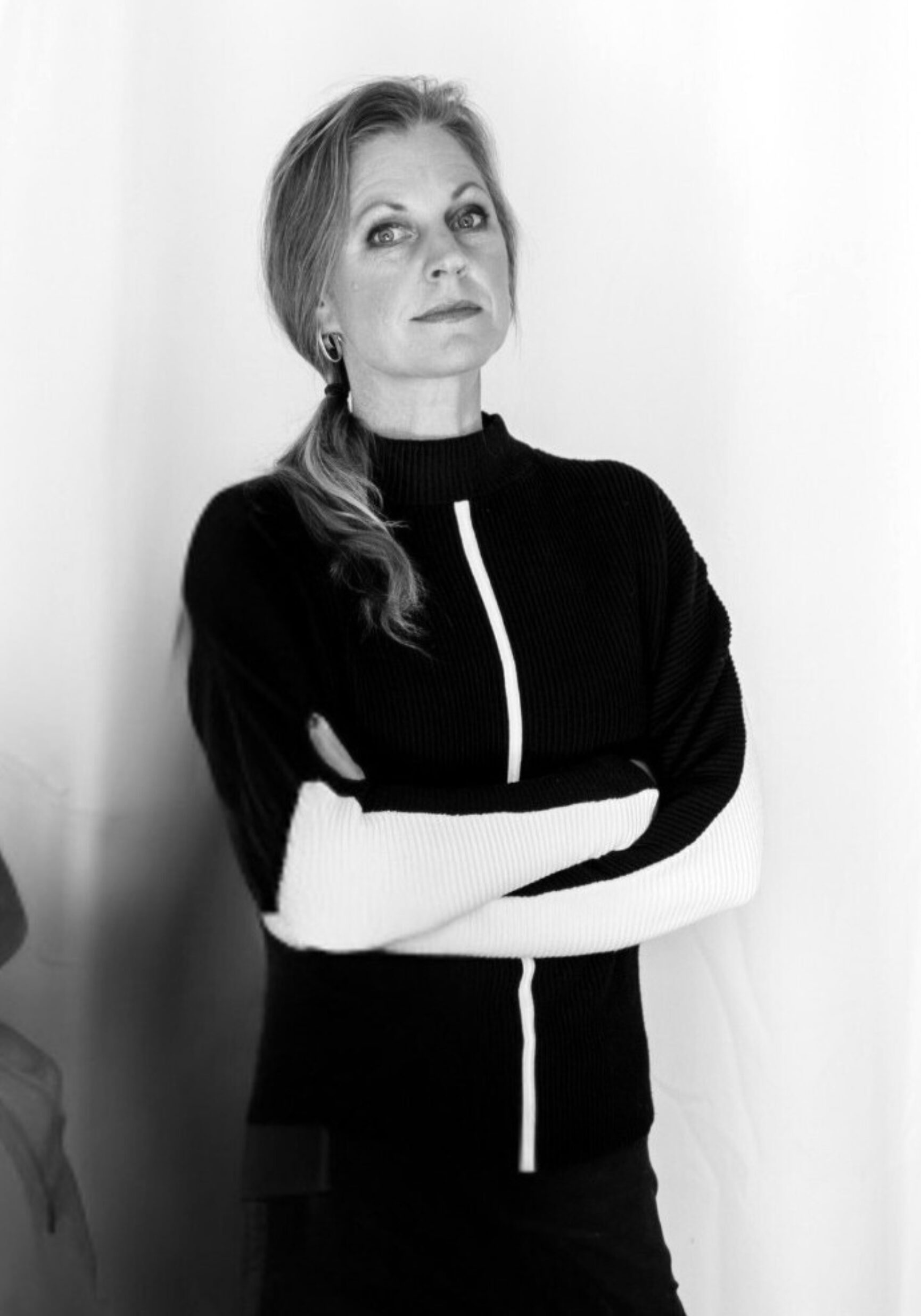
Guide to the human side of leadership and organisational life.
Inefficiencies, bottlenecks, and cultural breakdowns almost always trace back to the same root cause — failures in the human systems of relationships, social cohesion, and emotional intelligence. We call these soft skills, as if they were optional. They are not. In a world changing this fast, the resilience and relational capacity of your people is the only thing that will see your organization through.
Most culture development works on behavior — on the outside of the human being — while leaving the inner terrain that actually drives it entirely untouched. The result is change that doesn't stick.
I work from a different premise entirely. My methodology is built around the nature of the medium — the inner lives, motivations, and sense of community of the people who make up your organization.
From the inside out rather than the outside in.
I work with CEOs, founders, and senior leaders who have recognized this gap and are ready for an approach that goes to the source.
The Problem Nobody Is Naming
New innovations promise change.
But the paradigm remains stuck.
Never have there been so many tools and frameworks. The language has shifted toward "people-first," "human-centered," and "scaling the human edge." And yet the majority of culture change initiatives are considered failures.
Most organizations think they are putting people at the center. But the underlying logic of how they operate has not changed. Behavioral analytics, AI-driven engagement tools, competency frameworks, and culture programs all treat people as variables to be optimized rather than human beings seeking buy-in, purpose, and fulfillment in their work.
This is not intentional. It is a drift — driven by competitive pressure, shareholder demands, and the seductive promise of technology. And it is producing consequences you can already feel: disengagement, quiet quitting, poor collaboration, leaders who are burnt out — essentially, cultures that look good on paper but feel hollow, even toxic, to live in.
A Different Paradigm
An organization's greatest resource is the creative, generative, and collaborative potential of its workforce.
Everything that goes on in an organization is downstream of its culture. The inner life of leaders and their teams is not peripheral to organizational effectiveness, it is the source of it.
It is the highest leverage point for any change you want to make.
That is where I work.
The Right Fit
I work with leaders and teams in organisations
of 20 to 500 people.
A culture is not going to be built through compliance or social engineering the desired behaviors. It is built through connection and community. People want to be given the opportunity to grow into their full potential, and find meaning and connection in that.
Questions for you to consider:
-
Do you observe shadow dynamics that constantly sabotage quality of work, and compulsive behaviors that undermine fellowship and teamwork?
-
Are you ready to address and transform limits and blind spots that are being amplified across your organization?
-
Are you interested to grow the creativity, initiative, and buy-in from your workforce to navigate increasing VUCA — Volatility, Uncertainty, Complexity, and Ambiguity?
The Approach
Not a framework.
A method.
Like a sports or music coach, I bring knowledge of the terrain, technique for working with it, and practices to build into daily life.
K
Pillar One
Knowledge
Understanding the inner terrain — of the individual, the team, and the culture — at every scale is essential to guide any cultural intevention. Without this, even well-intentioned development stays on the surface.
T
Pillar Two
Technique
Knowledge without technique is philosophy without application. Technique gives you the practical tools to work with the inner terrain consistently under pressure and in the real conditions of organisational life.
P
Pillar Three
Practice
Genuine capability requires practice built into daily operations. Without it, knowledge and technique remain theory. Practice is what brings everything into lived experience which is the prerequisite to growth in your people.
What People Say
"
I can't say enough about how much Louisa and Magenta helped my company bring our vision to life. With her help we built the company culture that we've always dreamed of. Her approach is a perfect balance of conceptual understanding of humans and teams coupled with practical tools, systems, and resources. She helped me grow as a leader by leaps and bounds and I feel more confident and at ease in my role of CEO because of her.
Rachel Hazlett-Karr
Former CEO, Lucky420s · Top Producing Realtor
"
When I faced a conflict with a close colleague in a complex project that depended greatly on the two of us and the health of our relationship, we reached out to Louisa to help us. Louisa facilitated a process through which we could understand and empathize with each other, and we managed to unblock our relationship and conclude the project successfully.
Mille Bojer
Director, Reos Partners Europe
"
To have worked with Louisa is a blessing beyond measure. She is clear-eyed, genuine and true with an uncanny capacity to see through my limiting tendencies while at the same time helping me to recall and see the gifts that are inherently mine. She is a rare gem with the qualities of an alchemist, bringing together insights into what ails us personally and collectively while holding a space for the possible to emerge.
Luke E.
Psychotherapist, Writer, Musician
"
Through my work with Louisa and Magenta I was able to explore my own aspiration and abilities, and how that did or did not line up with my work. I also learned several practices with which I am beginning to come out of the cerebral and into the lived experience of my challenge. I return often to the work we did together to help re-situate myself, and always find new layers of insight.
Erin Harrington
Executive Director, Salmon Project, Alaska
"
Magenta is a trusted partner. As a foundation, we're dedicated to bringing new approaches to global problems that have long been considered intractable, and we're serious about learning and applying methods and tools that really work. Magenta is helping us learn how to identify the visible and invisible causes, sources, and structures of violent conflicts, and how to confront and transform ideologies, traumas, and legacies of colonialism and racism.
Bryan Sims
Investment Manager, Humanity United
"
ORAP had the privilege of working with Magenta Studios while helping to build peace in Zimbabwe. Magenta helped us find new ways to solve complex problems and do together what we couldn't do as separate individuals or organizations.
Mvuselelo Huni
CEO, Organisation of Rural Associations for Progress, Zimbabwe
"
I was part of a team serving a complex scenario building process. I found the individual coaching sessions with Louisa to be extremely useful, helping me to connect to my source, improve my communications and co-working practices, and align my attention with my intention. Every minute of each conversation was so full of meaning.
Anai Linares
Independent Consultant
"
I have known Jeff and Louisa for more than twenty years. They are next generation luminaries who carry forward everything I have spent my life advancing: practical and spiritual insights into the nature of being human that provide meaningful ways forward on the most pressing and challenging issues of our times.
Miha Pogacnik
Cultural Ambassador of Slovenia
Begin the Work
Ready to go to
the source?
If what you have read here resonates — if you recognise the drift and are ready for an approach that goes to the source — the next step is a conversation. No obligation, no pitch. Just an honest exchange about whether this work is the right fit.
Discovery calls are complimentary and typically an hour.