
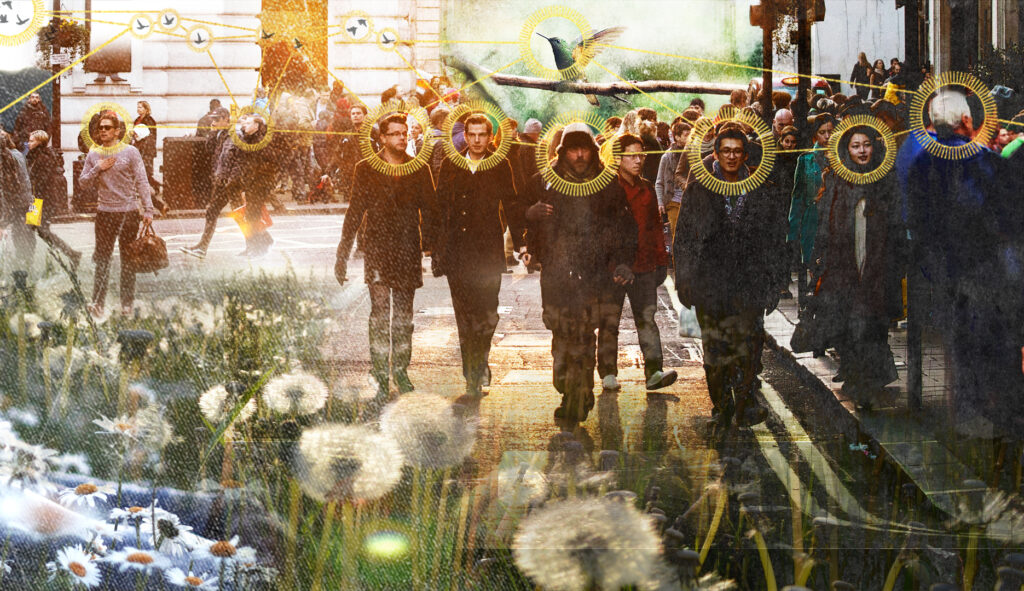
Global employee engagement is collapsing. Why this is, and what to do about it.
The research consistently identifies the same surface causes of employee dis-engagement:
- manager burn-out,
- lack of clarity,
- erosion of purpose,
- broken feedback systems,
- AI anxiety.
What the research does not address is why these things are happening, and certainly not what the real cause is. The conventional explanation is usually structural: organisations are doing the wrong things. They introduce new strategies, hire new consultants, try new things.
Most of these efforts are destined to fail.
Or to be more specific, the more reliable finding across multiple studies is simply this: failure is significantly more common than success, and the range sits somewhere between 60% and 88% depending on what you define as failure.
I propose that the real reason why organizations are doing the wrong things is because the people leading them are unaware of the real drivers of culture.
And anything you care to propose and then institute are like paper boats floating on an ocean of culture.
The engagement crisis is not a management problem.
Managers themselves are experiencing greater stress, burnout and attrition than ever before because they are caught right in the middle. No, it is an inner life problem, the true driver of culture. And that is the conversation the research is not having; nor is leadership.
So what are the researchers saying?
Researchers are pointing to several overlapping explanations. No single cause seems to be dominating — and this is itself significant.
1. The manager squeeze. Gallup’s chief scientist Jim Harter writes: “In recent years, managers have been squeezed between new executive priorities and employee expectations. Many organisations experienced workforce changes after the pandemic — high turnover, rapid expansions, and layoffs. At the same time, employees have new demands for flexibility and remote work, but some companies have rolled this flexibility back. All of this eventually takes a toll on the world’s managers, who are struggling to make it all work.” Inspiring Workplaces
2. The collapse of basic human needs at work. Gallup’s Harter also writes that the current downward trend can be attributed to rapid organisational change, challenges linked to hybrid and remote work, new customer and employee expectations, and broken performance management practices. People of all ages come to work seeking role clarity, strong relationships, and opportunities for development — but managers are progressively failing to meet these basic needs. Gallup
3. The erosion of purpose and meaning. McKinsey researchers wrote: “Employees expect their jobs to bring significant purpose to their lives. Employers need to help to meet this need or be prepared to lose talent to companies that will.” The Grossman Group Culture Amp’s analysis suggests the decline in employee pride and motivation could stem from unfulfilled pandemic-era promises — employees may feel that the benefits of flexibility and wellbeing that were promised are quietly being rolled back. Culture Amp
4. AI anxiety. A 2025 Pew Research Center survey found that 52% of employees were “worried” about how AI might be used in their workplace, while only 36% were “hopeful.” Employees are anxious about job replacement, and that anxiety is translating directly into disengagement. The Grossman Group
5. The loss of trust in leadership. Culture Amp found a persistent decline in leadership perception since a high in 2020. Company confidence — how much employees believe the company will succeed over the next three years — has actually dipped below pre-pandemic levels, sitting 3% lower than 2019 and 7% below its record high of 80% in 2021. Culture Amp
6. Generational expectations are not being met. Researchers note that at a fundamental level, all employees — across every generation — appreciate the same things: respect, purpose, trust, fair compensation, and opportunities for growth. What organisations are grappling with is the diversity of individual needs. The challenge is simplifying complexity at scale while delivering increasingly personalised experiences. Simpplr
7. The measurement question. One important dissenting voice: some researchers argue we may be measuring the wrong things entirely. In AI-disrupted, distributed workplaces, traditional engagement surveys capture snapshots of sentiment but omit context. They rely on averages and miss team-level or demographic nuances. The question being raised is whether the frameworks we use to understand engagement have kept pace with how work itself has changed. Simpplr
What are you observing from this summary?
What are you observing from this quick summary of the research on the collapse of global employee engagement?
I’m observing that they all have something in common: they each require a fundamental shift in how we think about people problem-solving. Also, that there is a driving force that is larger than a single organization making good or bad strategic decisions impacting their workforce: culture and society.
If we take a global view of culture and society, we can see fairly easily that trust in previously trusted institutions and leaders has collapsed.
The true incompetencies, rot, and corruption of our economic, social, political, and spiritual systems are being exposed more and more.
Inflation is creating financial pressure not seen since the Great Depression — the middle class is disappearing.
People are not just facing systemic and economic pressures; they are facing an existential moral crisis: will those in power do the right thing, the easy thing, or the greedy thing?
Let me spend a moment digging into this because I never hear anyone talking about this exact point even though we’re all talking around this point. And that is, what’s being asked of us is to engage with each other and as leaders with a greater moral capacity. You as a leader, carry a greater moral responsibility than others do, to bring this forward.
How does that land with you?
Why is this happening?
This is not a surprise, really; it is evolution. We are growing out of the systems we have lived within for the past 100 years. These systems are dissolving because they are doing exactly what they were designed to do, but we have outgrown them.
And what are organizations missing?
Organizations are slow to recognize that the pressures people face are not just structural and economic; they are existential. They are moral.
The challenges employees experience inside an organization are not ones that can be solved by outside mandates or vision statements.
Most organisations are still operating from an outside-in model, trying to fix people through systems, structures, and programs such as incentives.
What is actually needed is an inside-out shift. This is a profound reversal of everything we have known until now.
And this is where the real leverage is
The leverage is not in grand strategies, or in social engineering. Iit is in the small, everyday human-to-human interactions happening all the time.
As Gandalf said in Lord of the Rings: “It is the small things, everyday deeds of ordinary folk that keeps the darkness at bay. Simple acts of kindness and love.”
The decisions we make in how we treat each other — the agreements that hold us to higher standards of behavior — this is where culture actually changes. This is where we grow moral courage, moral integrity, and moral imagination for a better organization, a better world.
When people take a stand over what they can control — namely how they show up for others — that is when a shift in culture begins that can lead to systemic change.
This is the new social change: a grassroots, self-organizing movement arising from a shift in what Emerson called “the master ideas reigning in the minds of many persons”
So what does this look like in practice?
It looks like working with leaders and teams to find meaning, purpose, and more collaborative and trusting relationships within real and unavoidable organisational limits.
It means Improving relationships and teamwork regardless of what is happening higher up in the food chain.
It means investing in and developing the disciplines that help people navigate complex and distracting noise in company systems
And It looks like working with managers so they can better support their people, facilitate higher quality cross functional collaboration, and better manage the necessary tensions between leadership and the workforce.
It also looks like strengthening the quality of everyday interactions through:
- Communication skills
- Understanding relationship dynamics and working with them in healthier ways
- Managing conflict with more skill and less collateral damage
This requires a deeper shift that arises out of knowledge and skill.
We do not learn relational skills at school or university — we repeat what we grew up with because we don’t yet know better.
Soft skills are the new hard skills — they are harder to develop than they appear and more central to life than we have historically respected.
We are moving from an old moral code still being imposed from outside, to one that arises from within each person — out of a genuine desire to do the right thing, not the easy thing.
This is the inside-out revolution: not forced from above, but freely chosen. However it can be ignited by an inspired leadership.
A fellowship of people, leaders, teams, and workforce, can decide together to change the world through how they show up for each other, every day, through thick and thin. Thus, investing in the necessary knowledge and skills to bring new ways of being and doing to life with the intention to improve quality of life for everyone.
This is how I see employee engagement being met as a real opportunity to move everyone forward in the right direction.
Key sources for this article: Gallup State of the Global Workplace 2025 · Culture Amp 2024 Engagement Report · McKinsey — Help Your Employees Find Purpose · Pew Research Center 2025 AI in the Workplace Survey · DHR Global Workforce Trends Report 2025 · The Survey Initiative Benchmark Database 2024